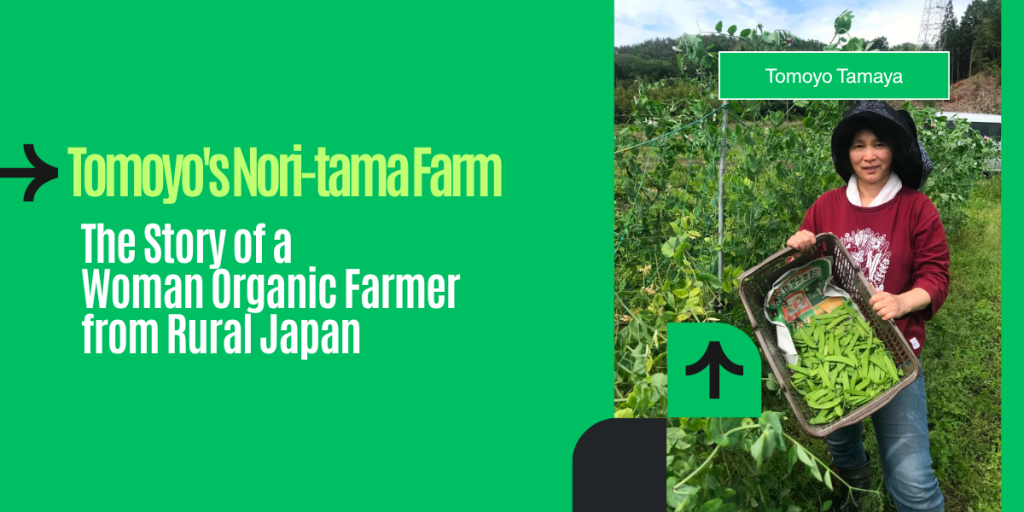
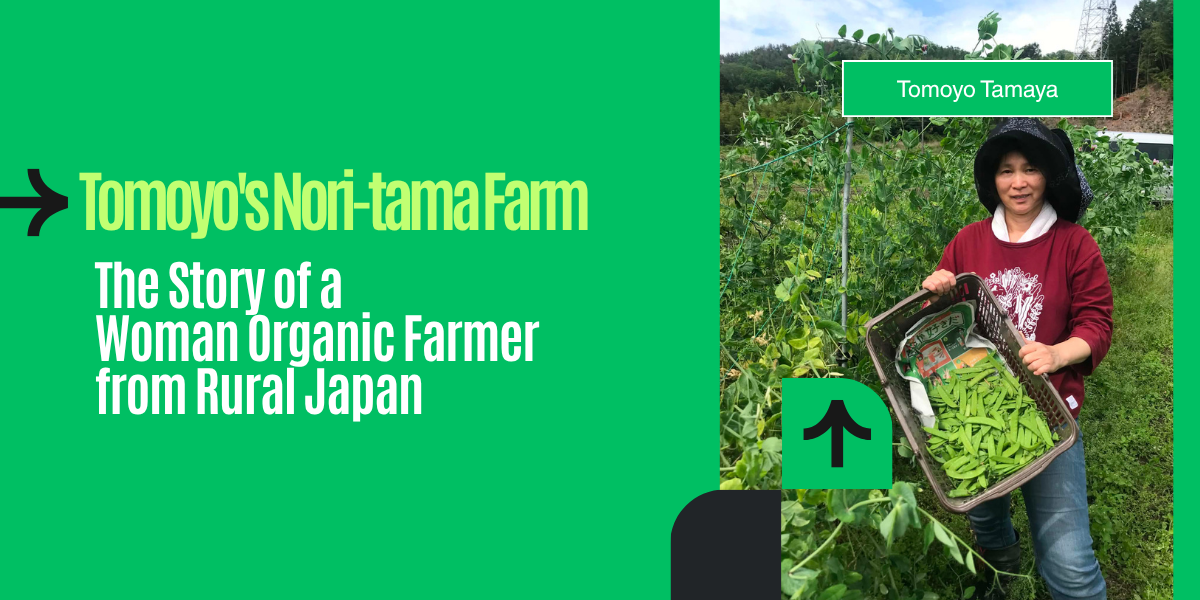
There is a train station near Tomoyo’s farm in rural Japan with one vending machine and no people. She is an hour from Osaka, one of the most densely populated cities in the world, but the land she farms feels far removed from it.
She and her husband, Norikazu Sakaguchi, run a small organic farm, the only one in their village. Norikazu started his organic farming practice after he graduated from university in 1994. Tomoyo manages most of the housework, around 80 percent by her own account, and laughs when she says so, because two of their three children are autistic and need special care. Tomoyo is a mother, first and foremost, before she is a farmer, but she still fights the idea of gender-based division of labor. What they grow changes with the season: vegetables, local varieties, crops that have always belonged to that soil. Black beans, which her region is known for, are grown, sold, and eaten locally.
Tomoyo has farmed long enough to trust her land rather than manage it by formula. Once the mineral balance in the soil is right, she says, the need for agrochemicals disappears. The micro ecosystem takes over and the land begins to protect itself. Insects, birds, and animals, the things most farmers are taught to fight, are simply part of a system that is self-sustained with microbes. Farmers have always found ways to survive these things, she believes, and that knowledge has passed down through generations who understood that farming against nature doesn’t hold up over time.
When a harvest is difficult, she doesn’t stop working. She dries and pickles plums into umeboshi. She makes miso from fermented rice and soybean. She forages wild edible leaves and fruit and turns them into products for her customers. Whatever is left over, she shares.
She holds one belief firmly: organic food shouldn’t be something only wealthy people can afford. In Japan, organic produce carries a premium that puts it out of reach for most households, and for Tomoyo, that’s a real problem with how organic farming has been positioned. She isn’t growing food for a niche market. She grows it because she believes good, nutritious food belongs to everyone, including the farmers who grow it by hand every day.
Therefore, “Shindo-Fuji 身土不二” is so important to her. This is one of the major principles of Japanese macrobiotic foods. It is a concept meaning that our bodies and the land we live on cannot be separated; we are what we eat. Tomoyo likes to live with gratitude to the nature that surrounds her.Stories like Tomoyo’s rarely make it into the larger conversation about organic agriculture. Small family farms, often run by women, working in relative isolation, holding onto farming knowledge that is both old and still relevant, don’t often get told at scale. But they’re part of the foundation organic food systems across Asia are built on.
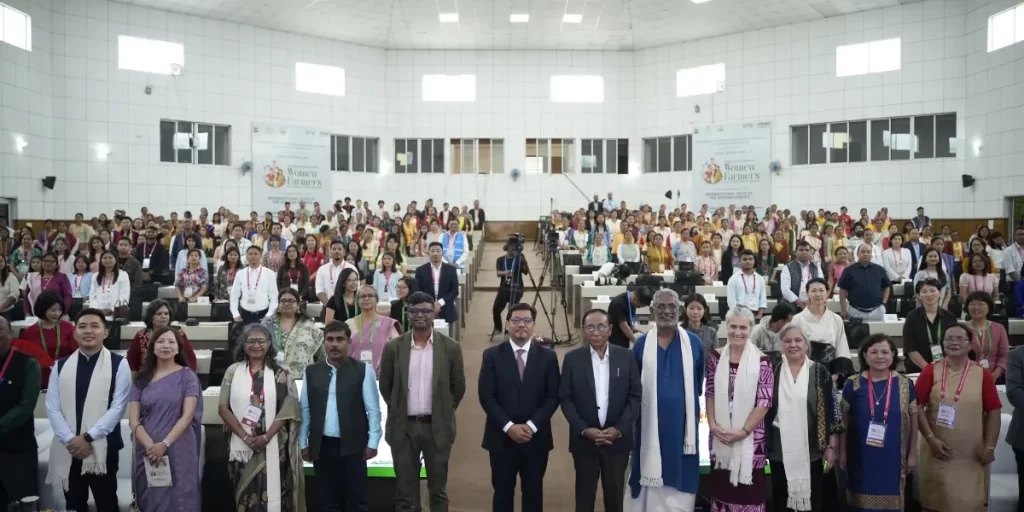
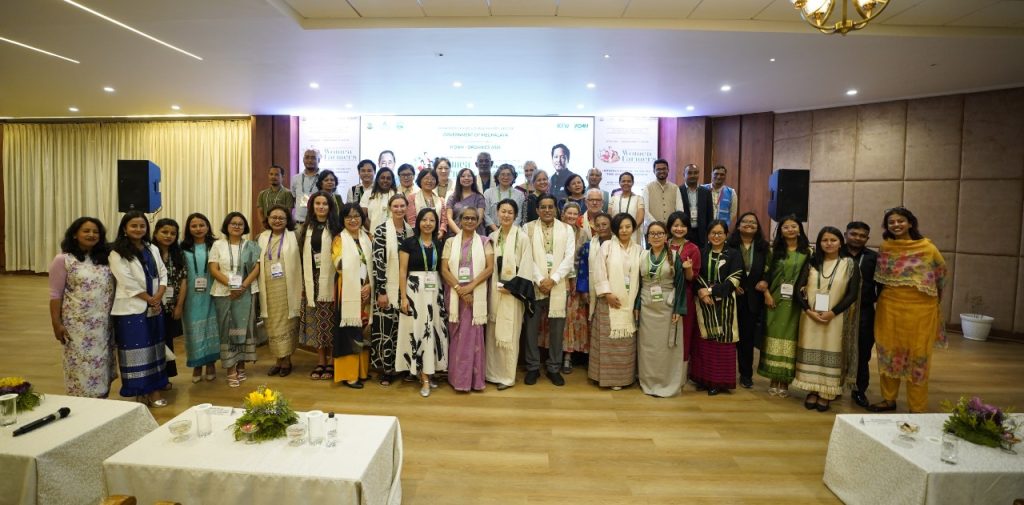
In June 2026, the International Conference on Women Farmers and Organic Food Systems brought some of these women together in Shillong, Meghalaya. Tomoyo travelled from rural Japan to take part. What she brought to the room wasn’t a presentation. It was decades of farming honestly, giving generously, and holding onto a belief in what food can be.