Some partnerships begin with a conversation. This one began with a conviction — that organic agriculture in Northeast India has the foundations, the knowledge, and the people to become a model for the region. What it needed was the right institutional backing to take it further.
On 27 June 2026, in Shillong, Meghalaya, IFOAM Organics Asia and the Meghalaya Natural and Organic Society for Livelihood and Innovation in Agriculture (MEGNOLIA) signed a Memorandum of Understanding, formalising a five-year commitment to advance organic agriculture and strengthen opportunities for the farmers — predominantly women — who are at the heart of it.
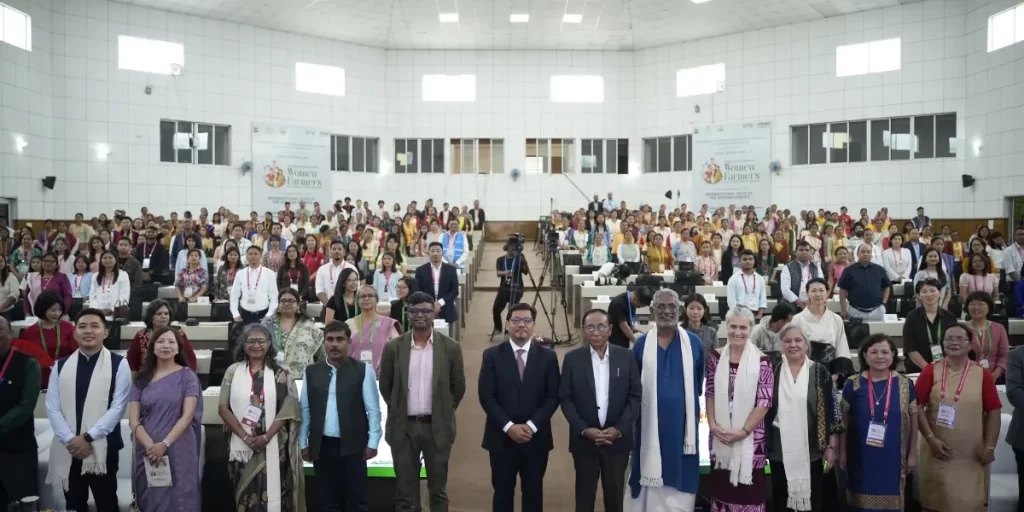
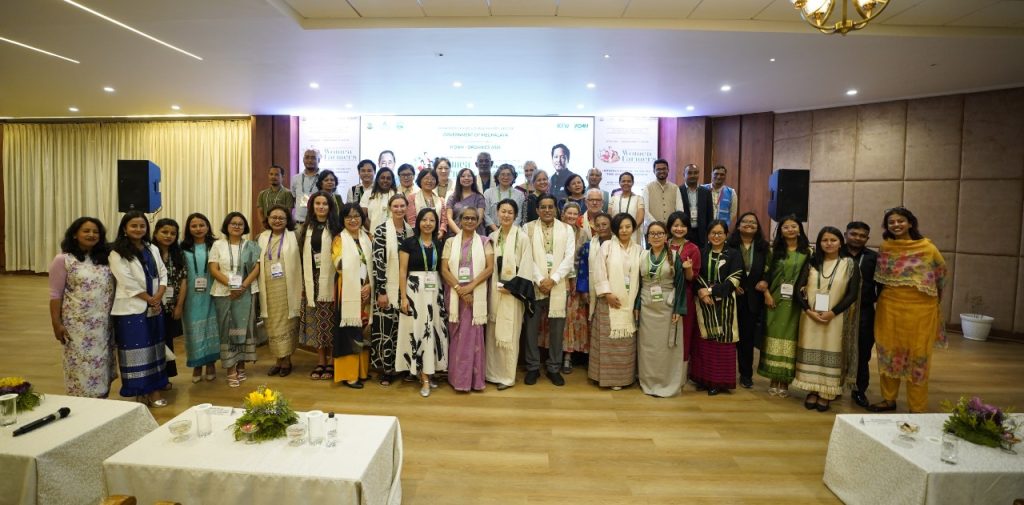
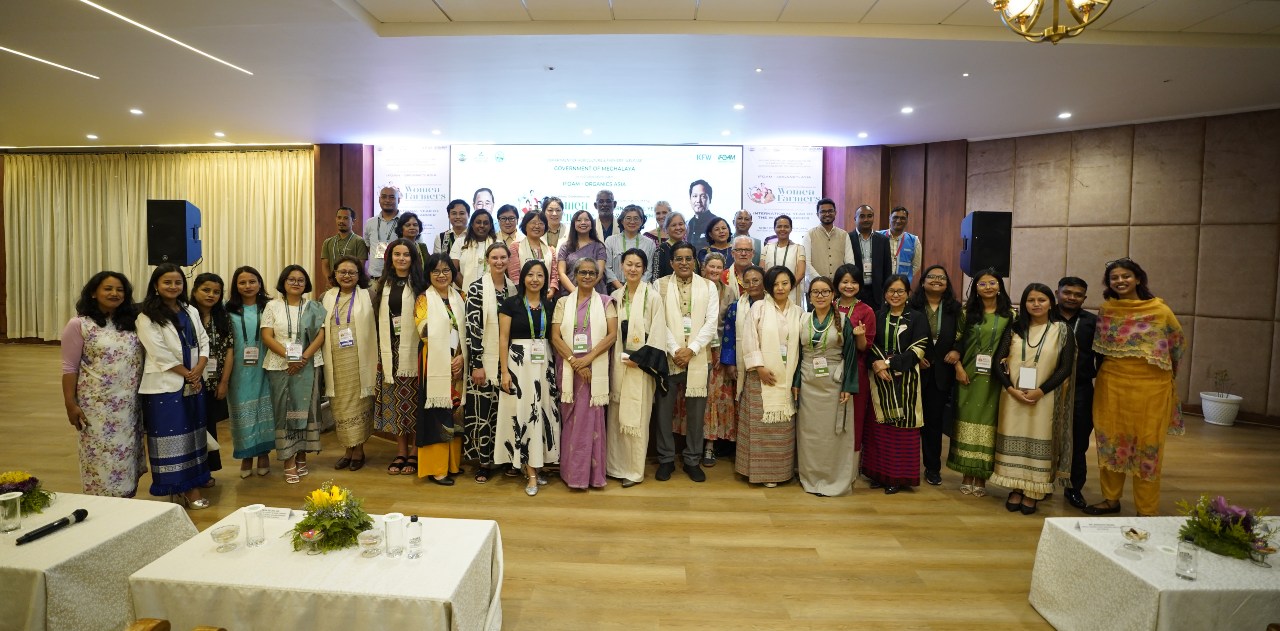
The signing took place at the close of the International Conference on Women Farmers and Organic Food Systems, the first conference of its kind in India held in recognition of the UN International Year of the Woman Farmer 2026. That the MoU was signed here, in this room, at this moment, was not incidental. It was a reflection of everything the two days had made visible — the depth of knowledge, the strength of community institutions, and the scale of what Meghalaya has already built.
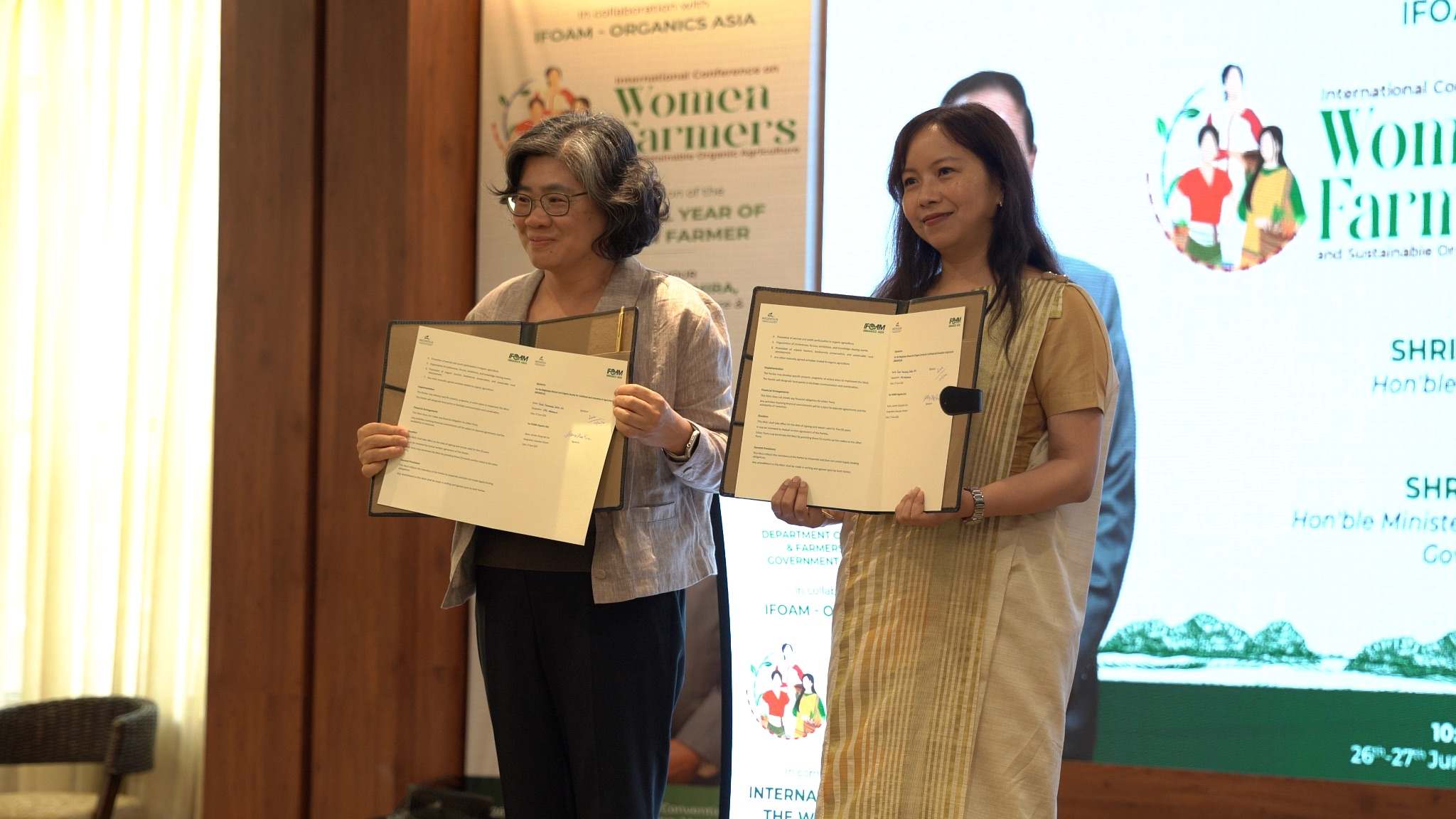
Jennifer Chang, Executive Director, IFOAM – Organics Asia, with Iswanda Laloo, IAS, Secretary, Department of Agriculture & Farmers Welfare
The conference itself carried significant weight from the outset. It was inaugurated by the Chief Minister of Meghalaya — a signal that organic agriculture and women’s leadership within it are not peripheral concerns for the state, but central to its development vision. That political endorsement set the tone for what followed: two days of substantive exchange between farmers, Indigenous knowledge holders, cooperative leaders, researchers, and policy makers from across Asia.
It was in that context that the MoU was signed.
What the Agreement Covers
The MoU establishes a framework for cooperation across several interconnected areas — capacity building and training for farmers and extension workers, exchange of knowledge and best practices, development of organic markets and value chains, and the promotion of women and youth participation in organic agriculture. It also creates a formal basis for organising conferences, exhibitions, and knowledge-sharing events that connect Meghalaya’s organic farming community with the wider Asian region.
For IFOAM Organics Asia, this agreement represents something it has long worked toward — a direct, formal partnership with a state government body that has both the institutional architecture and the political commitment to drive organic transformation at scale. MEGNOLIA, established as the apex body for Meghalaya’s State Organic Policy, is not a partner in name only. It coordinates policy implementation, farmer training, certification, and convergence across government departments — making it one of the most substantive organic agriculture institutions in the Northeast.
For MEGNOLIA, the partnership connects Meghalaya’s farmers to IFOAM Organics Asia’s regional network — extending their reach into markets, knowledge systems, and platforms across Asia, and bringing Meghalaya’s organic story to an audience it deserves.
Why Meghalaya, Why Now
Meghalaya is not starting from scratch. It is a state where 53% of farmers are women, where matrilineal tradition means women own and steward the land, and where over 22,000 women are already certified organic farmers. The state has set a target of bringing one lakh hectares under organic certification by 2028 — and with 55,515 hectares already certified, that ambition is grounded in real progress.
What makes Meghalaya distinctive is not just its organic credentials. It is the fact that its farming systems are rooted in Indigenous knowledge — in the understanding of soil, seasons, and biodiversity that has been held and passed down, largely by women, across generations. The conference made this visible in ways that data alone cannot. Speakers from across Asia — from New Zealand’s Maori farming tradition to Vietnam’s women-led PGS cooperatives to drought-recovery communities in South India — arrived in Shillong and found in Meghalaya a reflection of something they recognised: a place where the connection between land, community, and food has never been broken.
That is the ground on which this MoU was signed.
A Five-Year Commitment
The agreement takes effect from the date of signing and remains valid for five years, with the possibility of renewal by mutual agreement. Jennifer Chang Hye Sun, Executive Director of IFOAM Organics Asia, signed on behalf of the organisation — a senior-level commitment that reflects how seriously IFOAM Organics Asia regards this partnership and what it believes Meghalaya represents for the future of organic agriculture in the region.
What comes next will be shaped by the specific projects and action plans both parties develop under this framework. But the direction is clear — to ensure that the women farmers who have sustained these food systems for generations are not just recognised, but genuinely supported, connected, and positioned to lead.